Let me paint a picture you might relate to You step outside one morning — maybe to grab a delivery or warm up your car — and you glance down at the driveway or walkway.
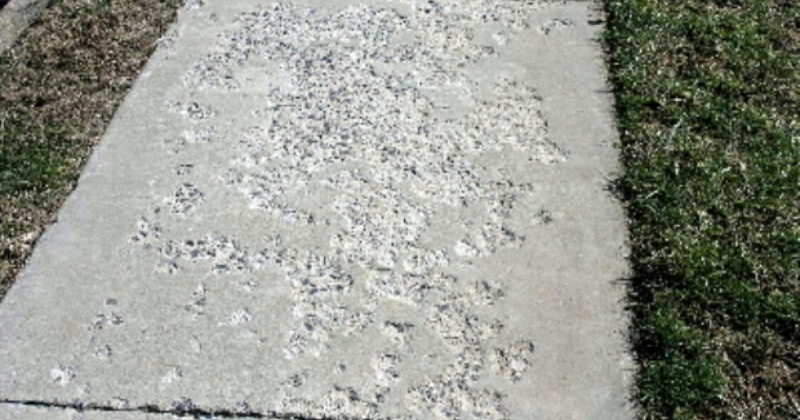
Something looks… off. A little roughness. Some tiny pits you swear weren’t there before.
You take your shoe and gently scrape the surface and, sure enough, a bit of the concrete flakes off. You stop. You look again. And you think, “Great… this is the last thing I need right now.”
Salt damage has that effect. It doesn’t show up with alarms and flashing lights. It sneaks in quietly, like a slow leak you don’t notice until you’re mopping the floor. If you’ve been looking up things like Fixing Salt Damaged Concrete – , chances are you already suspect what’s going on. So let’s talk about it in the most normal, human way possible — no fancy construction textbook language. Just simple, honest explanation.
What Salt Damage Actually Looks Like (Before It Gets Bad)
People often miss the early signs because salt damage doesn’t start dramatically. It’s almost subtle, like wear on an old pair of shoes.
Here’s what you might see:
- A slightly dusty, fragile surface
- Little pits or craters forming
- Rough patches that look sanded down
- Flakes that break off when you rub the area
- Cracks that seem to spread a bit each winter
Think of it like chapped lips. At first it’s nothing. A little dryness. Then, if ignored, it splits and bleeds. Concrete behaves almost the same. Just less painful — and more expensive.
Why Salt Damages Concrete (Without the Technical Babble)
You’ve probably heard people say “salt eats concrete” or “salt melts pavement.”
Not quite. Here’s the real reason, explained like we’re talking in a driveway:
- Concrete has tiny pores — thousands of them.
Salt gets into these pores.
Salt attracts water.
Water freezes in winter and expands.
And when that frozen water expands inside concrete?
It’s like blowing up a balloon inside a cardboard box. Something’s gotta give.
The result:
- Cracks
- Flakes
- Pits
- That worn, chewed-up look
And depending on the type of salt you use, some even react chemically and speed up the damage.
It’s not exciting, but that’s the truth.
Is Salt Damage Really a Big Deal?
Here’s a question I like to ask people:
If you noticed your car tires slowly cracking, would you wait until one explodes on the highway?
Probably not.
Salt damage works in the exact same slow-but-sure way. Maybe it’s tiny this year. Maybe you barely see it. But winter after winter, it grows.
And once concrete starts breaking, it never magically “heals.”
It always gets worse.
How Pros Actually Fix Salt-Damaged Concrete (Not the YouTube Version)
I’m going to skip the sugar-coating and give you the straightforward process.
Not the shortcut version.
Not the “just pour some patch mix” version.
Here’s what real repair looks like:
1. They really examine the damage.
A genuine inspection isn’t someone taking one glance and saying “Yup, it’s damaged.”
They check:
- How deep the pits go
- If the cracks reach the foundation
- Whether part of the slab sounds hollow
- If moisture is trapped inside
Salt damage usually hides inside the slab, not on top. That’s what most people don’t realize.
2. They clean the surface — and not lightly.
Loose flakes, dust, old salt… all of it has to go.
Pressure washing, scrubbing, cleaning solutions — the works.
Imagine trying to glue something to sand. It won’t stick.
Concrete’s the same.
3. Weak concrete gets removed.
This part makes people nervous because it looks like the contractor is “breaking it more.”
But they’re actually removing the parts that are already ruined — the flaky, hollow, unstable bits.
You can’t build on mush.
4. A bonding agent goes on.
This is the “glue” between old concrete and new repair material.
Skip it and the repair won’t last a season.
5. Cracks, holes, and pits get filled.
Not with cheap patch kits.
Professionals use high-grade repair mortars or polymer mixes that harden stronger than regular concrete.
Every hole gets its own treatment depending on depth and spread.
6. Many times, they apply a full concrete overlay.
If your driveway or patio looks like it’s been through a war, an overlay is usually the best fix.
It basically gives your concrete a brand-new surface — smooth, strong, uniform.
A lot of homeowners honestly can’t believe the before-and-after difference.
7. And then… the sealing. The step most people forget.
A high-quality sealer is the invisible shield that keeps salt out.
When sealed properly, concrete can handle winters much better.
When not sealed?
Well… you already know.
When You Should Replace Instead of Repair
Not everything is fixable. Sometimes the slab is too far gone.
You probably need replacement if:
- The cracks go through the entire slab
- The damage covers half the area
- Water is sinking into the base layer
- The concrete was mixed or poured poorly originally
Repairs in these cases are like painting over rust — the problem comes back.
Signs You Need a Pro (Not a $12 Patch Kit)
Here are the situations where DIY won’t cut it:
- Cracks keep coming back after patching
- The surface sounds hollow
- New flakes appear every winter
- Water sits on top instead of draining
- The concrete feels soft or sandy
When concrete feels “off,” it usually is.
How to Prevent Salt Damage (The Stuff That Actually Works)
Here are the things that truly make a difference — simple but powerful:
- Seal your concrete every 2–3 years
- Use safer ice melts (not rock salt)
- Rinse salt off after big winter storms
- Fix tiny cracks early before they spread
- Keep water from pooling around edges
- And of course… install concrete properly from the beginning
People underestimate prevention until they pay for repairs.
Final Thoughts (The Real Takeaway)
Salt damage isn’t dramatic at first. It doesn’t announce itself or demand attention. It grows quietly, season after season, until one day you realize your driveway looks like it’s been chewed by a giant. The good news is that Repairing Salt Damaged Concrete is absolutely possible. You can stop the deterioration, restore strength, and protect your concrete for the long haul — but timing matters. Concrete doesn’t heal itself, and waiting only makes repairs more expensive. With the right repairs and smart prevention, your concrete can last for decades. And honestly, there’s real peace of mind in fixing the problem before it turns into a full replacement.